Lebanese reporter dies after Israeli strike traps colleague in rubble
A photojournalist survived a missile attack in al-Tiri while her senior colleague was killed, despite a recent ceasefire agreement.
By Alexander Wright ·
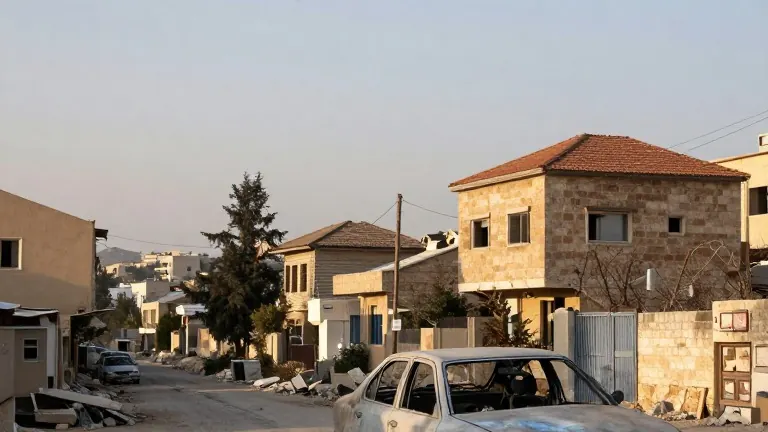
A month of intense airstrikes across Lebanon had just ended when an Israeli military strike hit a convoy in the south, killing a veteran reporter and trapping a young photojournalist under debris.
On the afternoon of April 22, Zeinab Faraj and Amal Khalil drove toward the village of al-Tiri to document war damage. The two women had collaborated previously after Khalil contacted Faraj following a review of her social media work. They were accompanied by Ali Nabil Bazzi, a 27-year-old municipal official, and Mohammed Hourani, a 37-year-old friend of the mayor. The group had met at Tebnine governmental hospital earlier that day, a location residents considered relatively safe during the conflict.
Faraj, who is 21 and finishing a degree in radio and TV, stated she felt no fear before the attack. She heard gunfire and artillery but viewed them as elements to capture on camera. The first missile struck the lead vehicle, setting it on fire. Faraj did not hear the projectile but heard Khalil scream. She approached the burning car to check on Bazzi, observing that the victims' bodies were torn apart.
Drones appeared shortly after the initial impact. Faraj described the aircraft flying low and close, diving toward her face when she attempted to cover it. Emergency services told the two women to drive away, but their car was struck by a second missile. The impact threw both women backward, with Khalil wrapping her arms around Faraj. They took shelter in a nearby house as Khalil sustained visible injuries to her face, hand, and leg. Faraj sent a text message to her sister reading, "There’s no hope left. Forgive me," before her phone battery died.
While hiding on a bathroom floor, a drone descended rapidly toward Faraj. She retreated inside and felt detached from the situation. A third missile struck the building, trapping Faraj under rubble. A paramedic reached her, holding her shoulders while a second worker cleared the debris. They extracted her as a stun grenade was dropped by a drone overhead. Faraj was transported to a hospital where nurses eventually confirmed Khalil's death. Khalil is believed to have died approximately one hour before the paramedics were permitted to re-enter the area.
The Israeli military stated the attack targeted saboteurs violating the ceasefire. Human rights organizations labeled the incident a war crime. Military officials had shared a video of Khalil from her newspaper one week prior, describing it as "terrorist media." Khalil had also received death threats from Israeli phone numbers. Faraj is preparing to return to university but struggles to walk due to visible injuries to her hand and face. She wakes at night screaming and remains sensitive to the sound of aircraft.
Faraj recalls the image of Hourani lying on the ground with his eyes open, looking toward her. She describes this visual as a persistent memory that haunts her.
Source: The Guardian